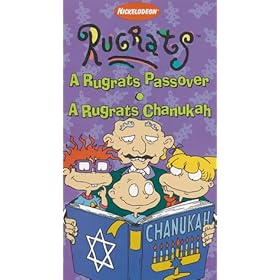
Today is the 8th day of the "festival of freedom," celebratory cousin to the "festival of lights." However, while the all-too-familiar Chanukah commemorates the miracle of oil, Passover celebrates the miracle of freedom.
About a week ago, I had the distinct pleasure of ushering in the 2009 rendition of this centuries old holiday with some of my SIT compatriots. Sitting at a table in the SIT library, warmed by the softly lit ambiance of the setting sun, we sang, we ate, we thanked, we remembered. Only three of the seven or eight of us huddled around that table were Jewish, but such technicalities made no difference to me. In these moments we were a community, perhaps not organized around a faith in some common conception of God, but, nevertheless our hearts and minds were bound together by something powerfully strong--our faith in freedom.
The lead up to the night's ceremonies was riddled with problems. As it happens, Passover seders, like most religious holidays built with an intricate cast of rituals, require a number of very specific foods and tools. As it happens, in their attempts to gather all of the necessary items for our celebration, the leaders of our festival of freedom found themselves in an Arab country that purportedly had absolutely no Jewish population and likewise none of the necessary goods for our Jewish celebration. However, our more than able and desperately creative hosts gathered a delicious panoply of substitutes, using potato chips for matza, barbecue mixed nuts for the required legumes, and smoked salmon for meat.
But, before we could sink our teeth into these delicious symbols, we take pause to discuss and remember the struggle of past peoples. Not just Jewish, but enslaved and oppressed peoples everywhere. However, quietly crowded around a library table in our school as the building's land-lord continually interrupted our celebration with impatient reminders of how little time we had and how little noise we were allowed to make, the symbolic meaning of Passover celebration took on a very potent inflection of reality.
One of the most important tenets of the festival of freedom is being open and welcoming. One is actually supposed to invite strangers into one's home to join the commemoration. A fellow gentile who was participating in the festivities with us was supposed to meet some of her Palestinian friends about half-way through, but instead of leaving with them, she followed tradition and invited them to join us. Despite the nauseous protest of some of our friends, she goes downstairs with a precarious smile. We wait. After a few minutes, she returns with a precarious smile, and a conclusive shake of the head. Recounting their refusal, she says, "No, ana filisteen!" ('No, I'm Palestinian!' Let me just take a brief moment to say that contrary to popular belief, not all Palestinians dislike Jews and vice versa. For example, my family more than welcomes my good friend here who is Jewish. They open their homes and their hearts to her, sharing laughs and deliciously home-cooked food. There are countless people who understand the difference between Jewish identity and Israeli support. Having said that, I'm still not entirely sure how many of my Palestinian friends would jump at the opportunity to participate in a Passover seder.)
Upon her return, we continue. Moving from song to song and explanation to explanation, we remember, celebrate, and learn.
Time presses on. We soon find ourselves joined in a multi-faith chorus of love and devotion, singing songs of Jewish freedom as the 'hour before sunset' call to prayer rings out in harmony with our voices of praise. Even before my experiential knowledge of Passover, I had known something about it (see the picture above), but here, in this moment, the festival of freedom's promises took on new meaning for me: resistance, transcendence, and power both historical and present.
The festivities soon came to a rushed close, the landlord following on our heels as we hurriedly tried to gather leftovers and clean plates. After saying our many thanks and exchanging warm embraces, we parted ways, back to our homes, likely unable to share our experiences with homestay families who may not know why we 'Christians' would celebrate such a holiday. But on my way back, talking with my Palestinian taxi driver, enveloped in Arabic songs of liberation, I began to reflect.
Is it strange in a way that we commemorated the emancipation of a minority people who presently oppress, exploit, and otherwise dehumanize a minority people? Of course, such a question presumes the problematic conflation of Jewish and Israeli I spoke about earlier. But, nonetheless, I find it curiously ironic that the songs we sang continually painted a picture of Israel not just as a land of blissful utopia, but as a state of freedom. However, all the while, now, a similarly idealized and powerfully vivid narrative envelops this same plot of land, but calls it by a different name and describes it in a different language. It makes me wonder if and when the Palestinians will have a Moses-like prophet to lead their diasporic exodus back to their homeland. It makes me wonder if and when the Palestinians will ever have their "festival of freedom."


No comments:
Post a Comment